Sasikarn Vongin
Mark Frömberg
Until 2020, Google’s Noto family included two typefaces for Thai and Lao, both designed to match stylistically with their Latin counterparts: Noto Sans, a loopless, monolinear design; and Noto Serif, a looped, modulated design. Although these are both exemplary designs fit for contemporary uses, the Noto family lacked a looped, monolinear design, which is the most common genre for general purposes in books, newspapers and documents.
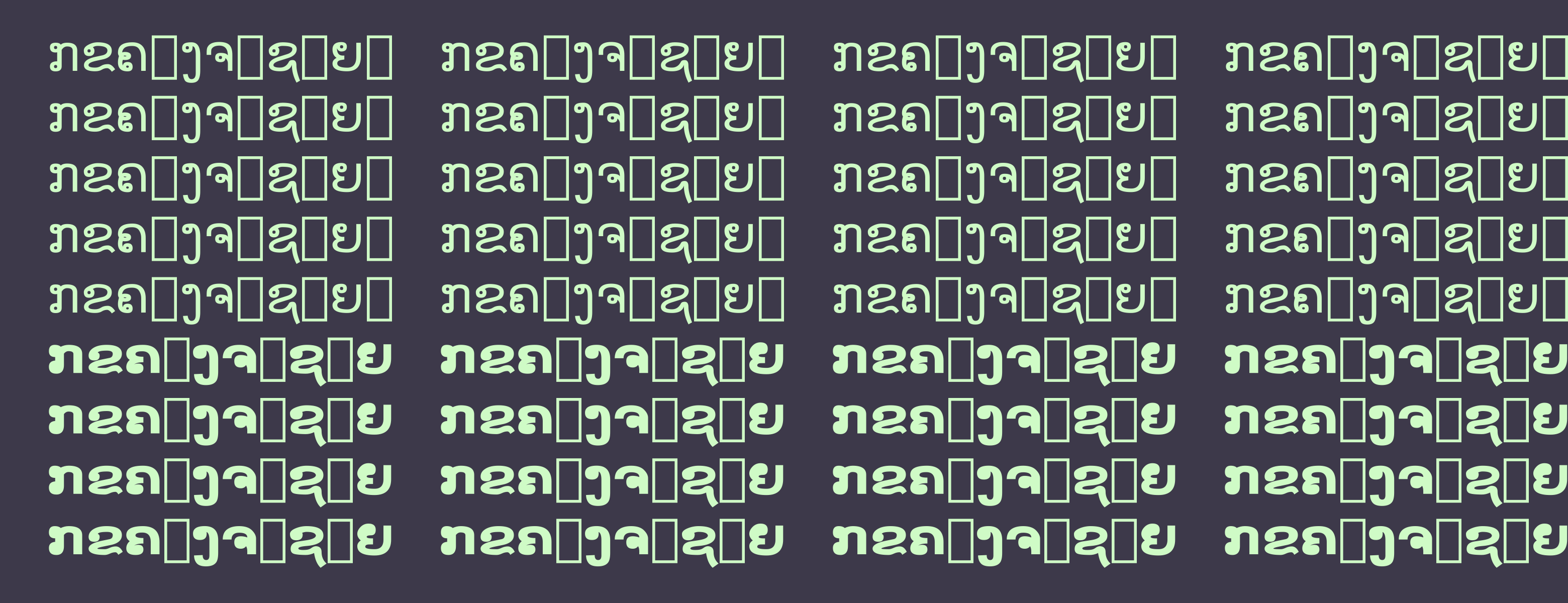
To fit that need, we created Noto Sans Looped Thai and Lao in a wide range of styles (nine weights and four widths, in both document and UI versions) that would offer maximum flexibilty and functionality in the most complex and demanding layouts from web content to editorial work.
The Thai and Lao designs were coordinated, sharing the same structures and proportions wherever possible, and we referenced the existing Noto Sans and Serif designs in Latin, Thai and Lao to ensure a coherent fit within the wider family.
Unicode 12, published in 2019, extended the Lao character set to include letters for Pali and Sanskrit languages, and Noto Looped Lao was one of the world’s first fonts to include these. Noto Sans Looped Lao also supports Lao, Bru, Jru’, Khmu’, Phunoi and Tai Dam languages, while Noto Sans Looped Thai supported Akha, Bisu, Chong, Gong, Khmer Surin, Khmu, Kuy, Lawa, Lisu, Mien, Mlabri, Moken, Nyah Kur, Pali & Sanskrit, Pattani Malay, Phlong, Phuan, Phu Thai, Thavung and Urak Lawoi in addition to Standard Thai.
Noto Sans Thai and Lao can be freely downloaded from Google Fonts.